n-Butanol has been around since the early 20th century. Its story begins with the search for biological sources of solvents during an age of industrial push. The first large-scale commercial method, the acetone–butanol–ethanol (ABE) fermentation process, found popularity during wartime, especially for the production of explosives-related compounds. The shift to petroleum-based synthetic methods in the mid-1900s marked a transition from fermentation to chemical synthesis. As a chemist, I’ve come across research lab write-ups from those decades, echoing the gradual change in supply and purification that mirrored industrial trends—process improvements made n-butanol more accessible and paved the way for diversified use in coatings, plastics, and other industries.
n-Butanol, also known as 1-butanol or butyl alcohol, carries the simple formula C4H10O. This straight-chain alcohol’s moderate polarity and four-carbon backbone create a balance: soluble enough in water, friendly to organic solvents. In practice, this means it serves as a building block for countless chemical products. Factories produce n-butanol both as a solvent and as a starter for plastics, resins, and esters, each use shaped by its molecular traits.
Colorless and clear, n-butanol gives off a strong, characteristic alcoholic odor. Its boiling point hovers around 117°C, and it melts below zero, making it almost always a liquid for commercial purposes. n-Butanol mixes with many organic solvents but only partly dissolves in water. This dual nature lets it interact with both hydrophobic and hydrophilic molecules. Its moderate vapor pressure means it evaporates at room temperature, which impacts handling in labs and factories. Its flammability, along with a flash point close to 35°C, puts safety front and center in every operation.
Manufacturers typically supply n-butanol in 99+% purity grades for industrial use. Labels list content along with major impurities, water percentage, and sometimes byproducts. Bulk containers, such as steel drums or high-density polyethylene tanks, carry UN numbers and GHS pictograms warning of flammability and adverse health effects. These details matter—I’ve seen regulatory checks hinge on small variations in labeling, especially for exports and chemical audits. Reliable packaging keeps the material usable and prevents accidental exposure or mixing.
Most of today’s n-butanol comes from petrochemical routes, mainly by hydroformylation of propylene to butyraldehyde, then hydrogenation to form the alcohol. Other processes, like fermentation using Clostridium bacteria, have seen renewed attention as industries reconsider biobased chemicals. Having worked in a fermentation lab, I can say that getting consistent yields from biological methods takes careful strain selection, strict control of sterility, and reliable substrate delivery. In contrast, synthetic chemical routes produce a much higher throughput, which keeps costs down for large buyers.
n-Butanol’s primary alcohol group sits ready for a range of reactions. Oxidation transforms it into butyric acid, esters form when n-butanol meets organic acids, and dehydration leads to butenes—compounds that feed back into plastics and rubber production. Pharmaceuticals and fragrances use butyl derivatives that owe their structure to the alcohol starting material. The simplicity of n-butanol’s structure opens doors for modifications, whether in a production plant or a university research lab focusing on newer, greener synthesis pathways.
Across the globe, n-butanol goes by several names: 1-butanol, butyl alcohol, normal butanol, and n-butanol, to name a few. Trade names reflect branding efforts from different manufacturers, yet the core molecule remains unchanged. This naming spread sometimes causes confusion in procurement and regulatory paperwork—familiarity with each synonym simplifies work, especially during international transactions or safety documentation reviews.
This chemical demands respect in the workplace. Its flammable nature and potential for causing dizziness or eye irritation set the tone for handling and storage. My own experience in pilot plants underscored the value of decent ventilation, proper grounding, explosion-proof equipment, and tough personal protective equipment. Safety data sheets (SDS) draw from past incidents and research, updating best practices as new hazards or chronic effects become understood. Fire suppression systems, fume hoods, and regular training reduce risks and, in the long run, build trust and expertise on any shop floor.
Coatings and paints use n-butanol as a solvent, where its volatility determines drying rates and finish quality. Plasticizers, resins, and latex products trace their origins to derivatives from this alcohol. It appears in fuel additives, as a feedstock for esters in fragrances and flavors, and even occasionally in hydraulic and brake fluids. Each of these industries shapes the specs they need—low water for resins, specific impurity thresholds for fragrances, or special blending for fuels. Its versatility has kept it in the chemical supply chain despite competition from more specialized alcohols.
Innovation around n-butanol has focused on improving yields, cutting waste, and finding green alternatives to petrochemical feedstocks. Research labs develop new bioprocesses using genetically engineered microbes to ferment sugar from waste sources. Others tweak reactor conditions for step-change improvements in efficiency. During my stint in academic research, I followed attempts to produce higher titers in bacterial fermentation, and each incremental breakthrough translated to commercial interest and environmental benefits. Journals and patent filings brim with attempts to stretch n-butanol's potential, from advanced separations to stepwise synthesis modification.
Toxicologists have looked at inhalation, skin absorption, and ingestion scenarios with n-butanol. Short-term exposure can cause dizziness, headaches, and irritation, while higher exposures pose risks of central nervous system depression. Epidemiological studies so far point to low carcinogenic potential but do caution about repeat exposure. Lab results lay out the need for proper industrial hygiene, from air monitoring to emergency wash stations. Unlike some alcohols, it metabolizes in the liver, producing butyric acid then eventually breaking down further—this pathway drives interest in safe handling and workplace exposure limits.
The future of n-butanol seems tied to its adaptability. As industries move toward sustainable chemical sourcing, biobased n-butanol looks more appealing, provided that costs and purity can keep up. For years, advocates of green chemistry have pushed for broader adoption of bioprocesses, pointing to lower carbon footprints and potentially novel material properties. This alcohol’s role as a fuel additive or even a direct blending fuel may grow as well, as stricter emissions standards and renewable mandates shape the global market. Advances in catalysis or genetic engineering might one day close the price gap between fermentation and petrochemical routes. Every step forward builds on the practical legacy and chemical flexibility that n-butanol offers.
Growing up near a major manufacturing hub, stories about chemicals drifted through my home like distant factory whistles. n-Butanol, at first mention, sounded like something you’d only find in a white lab coat’s pocket or a tightly locked research cabinet. That’s not quite the case. It works behind the scenes, quietly shaping a lot of the world around us, and unless you dig into industry news, it’s easy to miss how much rides on this simple alcohol.
A lot of talk focuses on cleaner fuels and how we can get away from gasoline. n-Butanol stepped up as an alternative fuel or blend component, interesting folks working on energy. It burns with less soot than many common options and holds more energy pound for pound than ethanol. The air feels a little cleaner after a ride using fuel with some n-butanol. Not everyone expects fuel innovation to come from such an unassuming compound, but researchers and engineers keep reaching for it partly because car engines run more smoothly when it’s in the mix.
Factories that build everything from car interiors to outdoor furniture all owe a nod to n-Butanol. Coating makers, leather tanners, and textile workers trust it as a solvent. It dissolves and mixes things up as paints, dyes, inks, and lacquers come together. I’ve seen workers stir up buckets in old repair shops, knowing the right solvent means a better finish and less sticky mess. n-Butanol helps deliver that smooth look and feel—a detail easy to overlook until it’s gone.
For years, makers of plastics, rubber, and detergents leaned on n-Butanol as a prime building block. Adhesives that fix shoes, plastics for backyard toys, and softeners in cleaning liquids often start out in factories with their own tall tanks of n-Butanol. Back in my first job packing shelves, I never guessed some detergents’ power to cut grease traced back to this colorless liquid. Companies trust it because it’s reliable, mixes well, and opens the door to making better ingredients through all sorts of clever chemistry.
No discussion about n-Butanol skips over safety. It vaporizes at room temperature and can knock someone back with headaches or worse if they breathe too much. Factories train up their teams to handle it with care—good ventilation, gloves, and watching for leaks matter just as much as chemistry skills. Some communities, especially near older manufacturing plants, speak up about spills or leaks, and these stories spark calls for greener or safer alternatives. Some biotech firms work on new ways to get similar results from plants and less risky processes, hoping to cut the health risks without losing performance.
Whether it’s fuel blends, everyday cleaners, or high-tech materials that pop up in the latest gadgets, n-Butanol keeps showing up in more places than one might expect. Research teams, industry workers, and regulators share the job of keeping its use both practical and as safe as possible. Modern chemistry moves quickly, and new stories about better ways to use or replace this workhorse keep coming. There’s always room for smarter, cleaner solutions in the places we’d least expect them.
Step into a paint shop or a chemical plant, and you might catch a sharp, alcoholic scent floating in the air. That’s n-Butanol, a straightforward solvent that’s found in cleaners, paints, food flavorings, and even some pharmaceuticals. With chemical factories pumping out millions of tons each year, its reach stretches far beyond industrial sites. It doesn’t seem like much at first sniff, yet even substances that blend so seamlessly into daily work can pose more than a mild irritant.
I remember touring a factory floor where workers prepped chemical coatings. N-Butanol wafted through the air, and folks joked about the "permanent perfume." Within minutes, some workers felt their eyes water, while others complained about dizziness and headaches. Looking at the safety data, it’s clear why. Short-term exposure can irritate the nose, throat, and eyes. Exposure can numb nerves, slow reflexes, and in some cases, knock someone off balance entirely. The Centers for Disease Control and Prevention (CDC) and the National Institute for Occupational Safety and Health (NIOSH) have laid out exposure limits for n-Butanol indoors—around 50 parts per million for an 8-hour shift. Repeated exposure above those limits is not just uncomfortable; it’s downright risky.
Most people outside chemical industries face much lower exposure, often not enough to raise alarm bells. Those working directly with the liquid or the vapor, though, need reliable protective equipment, ventilation, and training to recognize the symptoms of overexposure. I’ve seen shortcuts before, usually with folks assuming that gloves and a cracked window will do the trick. Yet, without decent masks, goggles, or working exhaust fans, the long hours add up. Chronic n-Butanol exposure links to liver and kidney changes and nervous system effects in some lab studies.
N-Butanol finds its way into some consumer products, though manufacturers usually keep concentrations low enough to skirt around real harm for people at home. That said, hobbies like painting or remodeling bring people closer to higher concentrations. My neighbor once stripped old paint from a boat in his garage with a solvent cocktail heavy on n-Butanol. He wore gloves but forgot about the fumes. After half an hour in the stuffy room, he felt lightheaded and nauseous. Open windows and a fan lowered the risk, but the experience made him swear off shortcuts.
As a rule, regulatory agencies keep a close eye on n-Butanol. The Environmental Protection Agency (EPA) and the Occupational Safety and Health Administration (OSHA) have fact sheets warning that it can be flammable and can create hazardous air if not used properly. In an emergency room, doctors treat inhaled or ingested exposure as potentially serious, looking out for confusion, lack of coordination, and even slowed breathing.
The goal sits squarely on respecting the chemical. At home or at work, read the labels, trust your senses, and don’t shrug off the need for fresh air in closed spaces. Industries need regular training and good old-fashioned supervision to watch for symptoms and limit risks. As someone who’s seen folks bounce back after smart precautions—and others suffer after ignoring the rules—I’d pick caution every time.
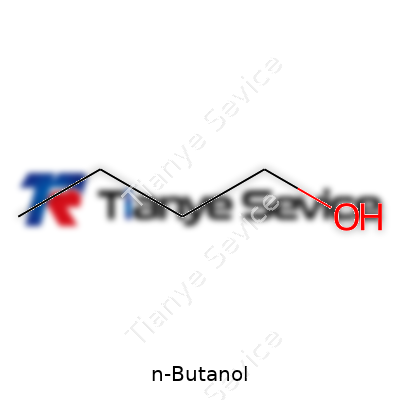
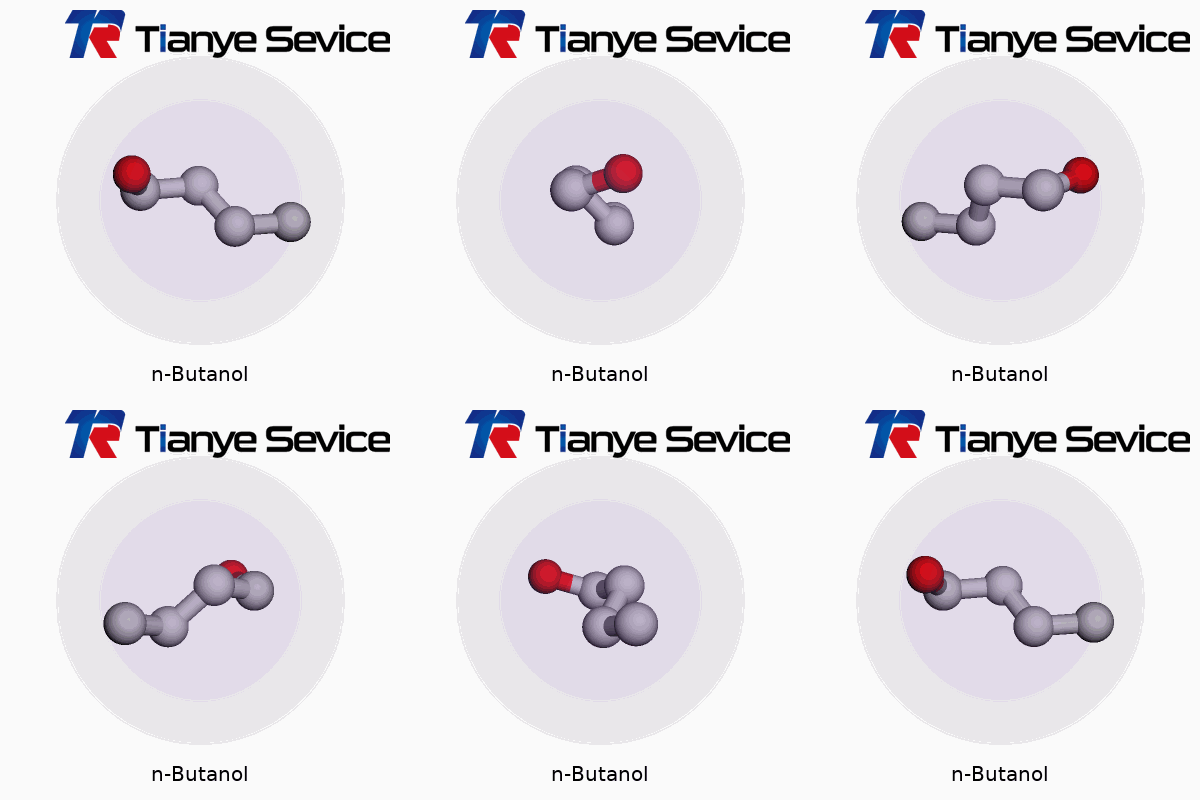
n-Butanol carries the formula C4H10O and is part of the alcohol group. Four carbon atoms, ten hydrogen atoms, and one oxygen atom make up this molecule. I remember learning in a college chemistry lab that n-butanol’s straight-chain structure gives it specific behaviors and uses that stand apart from its isomers like sec-butanol or isobutanol. Even seasoned chemists sometimes double-check the difference because the molecular formula alone does not reveal the arrangement, and physical properties depend heavily on that structure.
The arrangement of those atoms drives not just textbook properties, but shapes the day-to-day impact. n-Butanol behaves differently from its cousins. Its straight chain allows particular reactions that make it good for making plastics, coatings, and solvents for other industries. I saw firsthand in a manufacturing facility that slight changes in molecular structure change downstream results for finished goods. n-Butanol delivers a moderate boiling point near 118°C, which means storage, shipping, and workplace handling look different from ethanol or methanol, which many laypeople have seen in hand sanitizers and racing fuels.
Safety professionals look at molecular formulas when assessing health risks, flash points, and environmental impact. n-Butanol can be absorbed through the skin and cause irritation. Due to its moderate toxicity, the Centers for Disease Control and Prevention (CDC) recommends ventilation when using n-butanol at work. It can depress the central nervous system if inhaled in excess concentrations, according to multiple published occupational medicine studies.
Product designers and supply chain managers read MSDS sheets, but knowing the formula helps predict interactions long before a chemical ever gets tested on a shop floor. For instance, plastics made from n-butanol-produced butyl acrylate offer just the right balance between flexibility and strength for consumer goods and auto parts. If the chain’s structure changed, the product might warp or crack at low temperatures.
n-Butanol traditionally comes from fossil feedstocks through processes like hydroformylation. This method bonds propene with synthesis gas, then hydrogenates the intermediate to yield the final alcohol. Some green chemists chase fermentation routes, relying on Clostridium bacteria to turn carbohydrates into butanol. These biological routes promise lower emissions and reduced reliance on petrochemicals. Still, these methods face challenges, including lower yields and the need for process optimization. Research organizations invest in these approaches, hoping to see economics shift as technology matures and policy pushes for greener solvents.
Better labeling and strict occupational standards provide a buffer against short- and long-term harm, but successful chemical safety also leans on education. Every time someone in the lab or industry side learns that C4H10O means more than a textbook answer, they put themselves in a better position to make smart choices—whether choosing protective equipment or selecting green chemistry alternatives. Encouraging process optimization and innovation in fermentation methods helps cut the risk of shortages, price shocks, and environmental waste.
n-Butanol runs through many industries—paints, coatings, cleaners, and as a building block in chemical production. At first glance, its clear, slightly sweet-smelling liquid doesn’t seem all that threatening. A closer look, though, shows why it deserves some real respect. Its low flash point means that it can catch fire more easily than water, so treating it like the paint thinner in your home workshop would be a mistake. Over the years, I’ve seen workshops suffer from simple oversights, like putting flammable chemicals near a heater, which ended up causing costly accidents.
Forget about stuffing n-Butanol behind ordinary doors or leaving it in a corner near anything warm. It wants cool, well-ventilated rooms, far from direct sunlight or any spark. If there’s one lesson old warehouses taught me, it’s that pooling vapors pose a quiet risk—fumes can drift and find ignition sources even if you think everything’s safe. Steel drums or properly rated plastic containers, tightly closed, drive down the risk of leaks and spills. Always label each container clearly so no one grabs the wrong thing and pours it into a mop bucket.
Many insurance companies require flammable chemicals to sit in designated flammable liquid storage cabinets. These steel cases, painted bright yellow or red, become a familiar sight in labs and factories for good reason. Inspect those cabinets often, checking for dents or cracks in seals. If a storm blows out the power, backup ventilation makes a huge difference. Neglecting the air flow in these spaces has caught more than a few shops by surprise.
Personal protective equipment is more than a box to check. A splash of n-Butanol soaks into skin and pulls out moisture, leading to irritation or worse with long exposure. Goggles, gloves, and proper boots should walk through the door before the drum even opens. If I had a dime for every time someone shrugged off gloves in favor of speed, I’d have a stack of warning posters. Spills are common, especially if you’re pouring from heavy drums—absorbent pads and emergency kits must stay close.
Talk to any old-timer in chemical plants, and they’ll say the same: keep food and drink well away. Even quick hand-washing between jobs makes a difference. Training goes a long way in keeping people safe; new staff, temps, and even supervisors shouldn’t just look at safety sheets but rehearse real-life spill drills and evacuation routes.
Unexpected events like earthquakes, power outages, or a dropped container can happen at any moment. A clear plan lays out who calls emergency services, where to find the eye wash station, and which valve needs shutting. Fire extinguishers—rated for chemical fires—must remain charged and accessible, not buried behind old boxes. Signs showing exits and chemical hazards matter far more in chaos than many expect.
The simple steps—cool storage, good labeling, and regular practice—save both property and lives. Some people learn this through painful trial and error. Others take a little time up front, learn from experience and the science behind these chemicals, and keep their workspaces running smoothly for years. Facility managers and workers owe it to themselves, and to each other, to handle n-Butanol with the kind of respect that only comes from honest, practical care.
I've spent enough time in chemistry labs and workshops to know that n-Butanol demands respect. You unscrew that cap, and its sharp, sweet odor tells you it’s not water. The stuff evaporates fast and its vapors hang in the air longer than you expect. A crowded workspace with bad air circulation turns a small spill into a real problem if you’re not alert.
n-Butanol irritates the eyes, nose, and throat within minutes if you breathe it in. I’ve been close when someone sloshed some out of a bottle — not pleasant, and a quick run to the eyewash station followed. This solvent also dries your skin and can lead to cracking and rashes after regular contact, making gloves less of an accessory and more of a necessity.
People like to ignore fume hoods or leave windows closed to 'save energy.' Bad move. You want constant, fresh airflow anywhere n-Butanol gets used. I’ve worked in rooms where the concentration built up in less than an hour. Headaches, dizziness, and nausea followed. Proper fans and open windows clear these vapors out, making headaches and grogginess avoidable.
Lab coats, chemical goggles, and gloves win every time. n-Butanol soaks into fabric, so any spill on regular clothes soaks through to your skin. I saw a coworker skip gloves thinking he’d be more ‘hands-on’ — he dealt with red, itchy fingers for days. Nitrile gloves, not latex, last longer against the liquid. Always keep a spare set handy because torn gloves offer no help.
Steel cabinets, tightly sealed bottles, and no open flames. n-Butanol catches fire with a stray spark. I once watched someone let a flask heat up beside a Bunsen burner — set off the fire alarm and earned a stern lecture. Flammable storage cabinets are non-negotiable. Clearly label every bottle so there’s no confusion, especially during late shifts or busy days.
Mistakes happen, but speed matters. Absorbent pads and spill kits cut down the mess. Wipe it up, toss the rags into a closed bin, and tell others nearby. Nobody likes being caught off-guard by wet floors or nasty fumes. Never use water on a flammable liquid spill — sand, vermiculite, or commercial spill absorbents do a much better job.
I never felt fully comfortable until I memorized the emergency eyewash location and kept the number for poison control taped above the phone. If n-Butanol splashes in an eye, rinse with water for a solid fifteen minutes. If someone breathes too much in, fresh air and prompt medical help matter. Brush up on the safety sheets before every project, not after.
People tend to forget training, especially if months pass between handling dangerous chemicals. The best routine in my experience includes short, frequent refreshers and honest discussions about mistakes, not just rule-following. If someone spots bad habits, call them out early. A culture of real accountability, with everyone looking out for each other, turns safety from a checklist into a reflex.
| Names | |
| Preferred IUPAC name | butan-1-ol |
| Other names |
1-Butanol
n-Butyl alcohol Butan-1-ol n-Butan-1-ol Butanol Butyl alcohol |
| Pronunciation | /ˈbjuː.tə.nɒl/ |
| Identifiers | |
| CAS Number | 71-36-3 |
| Beilstein Reference | 1098726 |
| ChEBI | CHEBI:28885 |
| ChEMBL | CHEMBL418 |
| ChemSpider | 7277 |
| DrugBank | DB02161 |
| ECHA InfoCard | 100.004.349 |
| EC Number | 200-751-6 |
| Gmelin Reference | 13604 |
| KEGG | C00474 |
| MeSH | D001069 |
| PubChem CID | 263 |
| RTECS number | EO1400000 |
| UNII | 3K9958V90M |
| UN number | UN1120 |
| Properties | |
| Chemical formula | C4H10O |
| Molar mass | 74.12 g/mol |
| Appearance | Clear, colorless liquid with a characteristic alcoholic odor. |
| Odor | Characteristic, sweetish |
| Density | 0.81 g/cm³ |
| Solubility in water | 73 g/L (20 °C) |
| log P | 0.88 |
| Vapor pressure | 0.561 kPa (at 20 °C) |
| Acidity (pKa) | 16.0 |
| Basicity (pKb) | 15.2 |
| Magnetic susceptibility (χ) | −49.6×10⁻⁶ |
| Refractive index (nD) | 1.3993 |
| Viscosity | 2.95 mPa·s (at 20°C) |
| Dipole moment | 2.66 D |
| Thermochemistry | |
| Std molar entropy (S⦵298) | 160.5 J·mol⁻¹·K⁻¹ |
| Std enthalpy of formation (ΔfH⦵298) | −327.5 kJ/mol |
| Std enthalpy of combustion (ΔcH⦵298) | -2676 kJ/mol |
| Pharmacology | |
| ATC code | C3FA |
| Hazards | |
| GHS labelling | **GHS02, GHS07** |
| Pictograms | GHS02, GHS07, GHS08 |
| Signal word | Warning |
| Hazard statements | H225, H319, H335, H336 |
| Precautionary statements | P210, P233, P240, P241, P242, P243, P260, P264, P271, P280, P303+P361+P353, P304+P340, P305+P351+P338, P312, P337+P313, P370+P378, P403+P235, P501 |
| NFPA 704 (fire diamond) | 2-3-0 |
| Flash point | 35 °C |
| Autoignition temperature | 343°C (649°F) |
| Explosive limits | 1.4% - 11.2% |
| Lethal dose or concentration | LD50 (oral, rat): 790 mg/kg |
| LD50 (median dose) | LD50 (median dose): 790 mg/kg (oral, rat) |
| NIOSH | RT8490000 |
| PEL (Permissible) | PEL (Permissible Exposure Limit) of n-Butanol is 100 ppm (300 mg/m³) |
| REL (Recommended) | 100 ppm |
| IDLH (Immediate danger) | 1400 ppm |
| Related compounds | |
| Related compounds |
Methanol
Ethanol Propanol Isobutanol tert-Butanol sec-Butanol |